
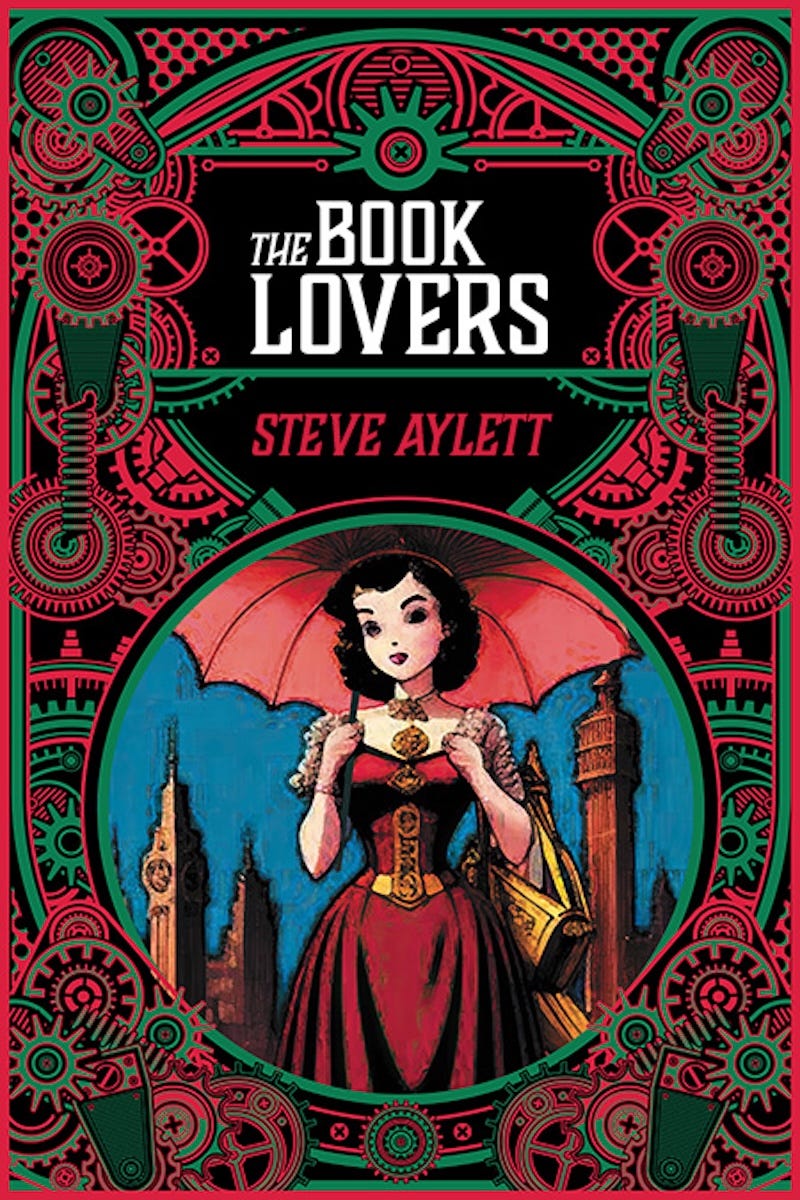
British author Steve Aylett’s writing has been described as “dreampunk,” “slipstream,” “bizarro,” “cyberpunk,” and “new weird,” among other things. I once wordily described it as follows: “He breaks down the myriad structures of the day, rearranges them into heretofore unseen configurations, and then describes the action along all-new interstices.” His books, which usually get stuck in the science fiction section, shake off such easy categories like an uncomfortable skin. Steven Shaviro hazards the following in his review of Aylett’s latest novel The Book Lovers:
Aylett writes with such precision that every sentence in his books, whether dialogue or description, has the polished elegance and paradoxical wit of an Oscar Wilde-style epigram; only you have to imagine a Wilde who has been kidnapped by Mister Mxyzptlk and sent into the fifth dimension.
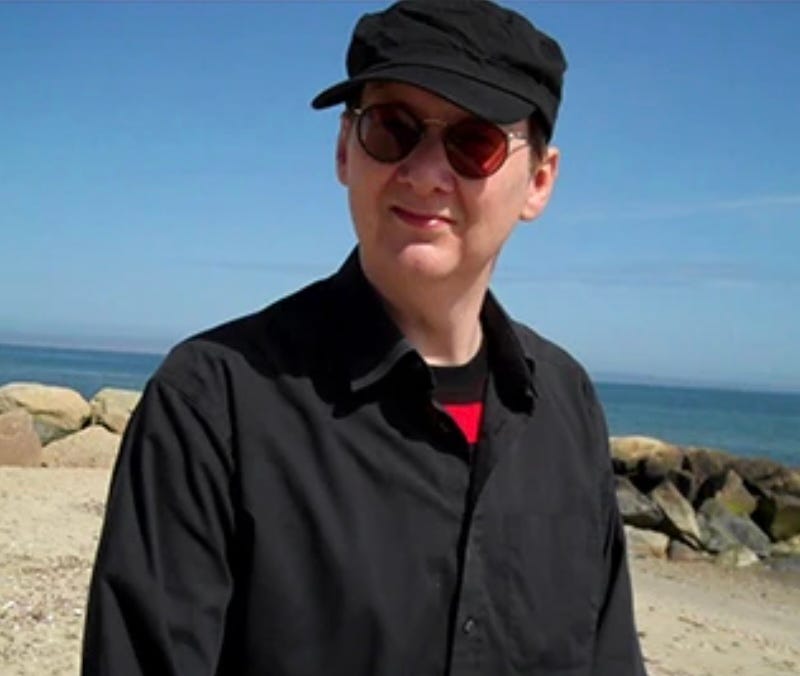
Steve Aylett just calls it satire, and he told me in our 2004 interview that satire
only works if there’s a scrap of honesty in the reader to begin with, so it doesn’t always work, and the way things are going socially, it’ll work less and less. There’ll be no honesty to appeal to, and no concept of that. There’ll be no admission that there are facts and nobody will even remember the original motive for that evasion — that to deny that there’s such a thing as a fact, means you can do anything to anyone without feeling bad about it. If you tell yourself they didn’t feel what you did to them, they didn’t feel it. To deny you did it means you didn’t do it…. Hypocrisy won’t exist in the future because hypocrisy requires an understanding of honesty as at least a concept. So satire will be a sort of inert, inoperative device which won’t hook into anything.
Still he persists. As you’ll see below, a few less-than-serious questions do nothing to dull his blades.
Steve Aylett’s The Book Lovers was recently released in the US by Anti-Oedipus Press. After 22 years, we reconvened to have the following exchange:
Roy Christopher: Since reading The Book Lovers, the line “Are you a clock pretending to be slower than it is?” has been lodged in my head. Is this because I’m afraid that I embody such a metaphor, or because a lot of other people do?
Steve Aylett: This is about people who pretend they’re less intelligent than they are, to blend in or to manipulate. I don’t think you’re doing that.
RC: I could just pull lines from the book and ask you about them, but I’ll spare you and our readers that exercise. There is one more, though: “Formulate a philosophy and sell it to the standing dead. The idea that hell is hot or that evil works in the dark, these ignore the everyday — that hell is a shining city on a hill, and the devil a dull excited crowd.” If you were to formulate a philosophy, would that be its basis?
SA: This is the villain outlining how to establish a manipulative hellscape, so no, it’s not really a philosophy I’d promote, but I do like to give the villain enough blithe self-awareness to lay open the workings. The world portrayed in The Book Lovers is similar to ours, in that evil people just openly say what they’re up to and nobody bats an eyelid or does anything, except maybe put themselves in the hands of someone worse, if they’re thick.
RC: That WYSIWYG aspect of our world seems even more dangerous than the idea of conspiracies and secrets, because it keeps a lot of people from commenting or critiquing, as if the extremes of overt corruption and complicity leave nothing to say.
SA: It can be tiring, but fact-checking, critical thinking, and speaking the truth are a way through. Or at the very least a way of maintaining some self-respect.
RC: When we last found ourselves in a formal interview situation, you claimed to do orthodox satire, “old-time satire in the Voltaire/Swift tradition.” Is this still true, or have you had to make adjustments to your approach?
SA: It’s still satire. The only alternative would be to go out assassinating certain people the way Mangione did. I don’t have the skills, and there’s the moral aspect which I wouldn’t be able to handle, mentally. It would fuck me right up.
RC: Though one doesn’t necessarily preclude the other, I love the idea of picking up the pen rather than picking up the gun. Writing is such slow protest. Your work has ventured out of the literary and into the comic. Any interest in other media?
SA: I want to do some more comics, and movies would be great but are still very hard to get off the ground, especially with original ideas.
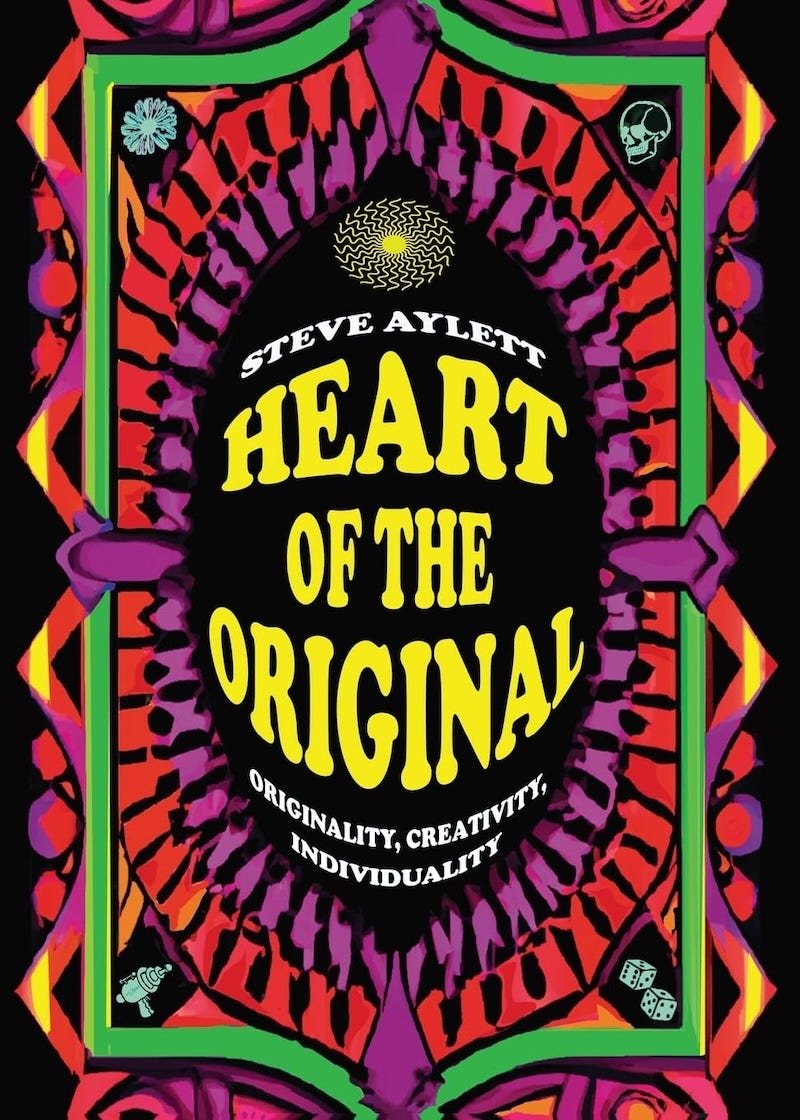
RC: The idea of originality, which you cover thoroughly in your own Heart of the Original, seems a conceptual quagmire. Your definition is, well, original, in its own recursive sense. Is tautology our only shot at truth?
SA: I think you know originality when you feel it.
RC: Who’s your favorite writer?
SA: Voltaire.
RC: How far would you go to defend someone’s right to say something you disagree with?
SA: There’s that supposed Voltaire quote “I disapprove of what you say but I will defend to the death your right to say it.” He never said or wrote that—it was invented by the biographer Evelyn Beatrice Hall. Voltaire was quite a precise thinker and that “to the death” thing is silly. I doubt he even thought it. Similarly I won’t defend to the death evil morons who knowingly assert false information.
RC: Do you want to wrap up there, or is there something else you’d really like to get into?
SA: I’m halfway through a new book, best thing I’ve done, but I’m not going to talk about it till it’s finished. Meanwhile, I recommend Lara Ricote.
Thanks again to Steve Aylett for taking the time to answer my questions and to you for reading the results.
Check out The Book Lovers from Anti-Oedipus Press!
P.S. Apologies to Mike Ladd from whom I stole the title.

I marshal the middle between Mathers and McLuhan.
Author of The Medium Picture (UGA Press, 2025), Post-Self (Repeater, 2025), and Dead Precedents (Repeater, 2019), among others; Editor of Boogie Down Predictions (Strange Attractor, 2022) and the Follow for Now series.